Fred MacAulay: The Scottish Comedian Who Defined Radio and Television Comedy
A Glimpse into the Life and Career of Fred MacAulay, the Comedy Legend

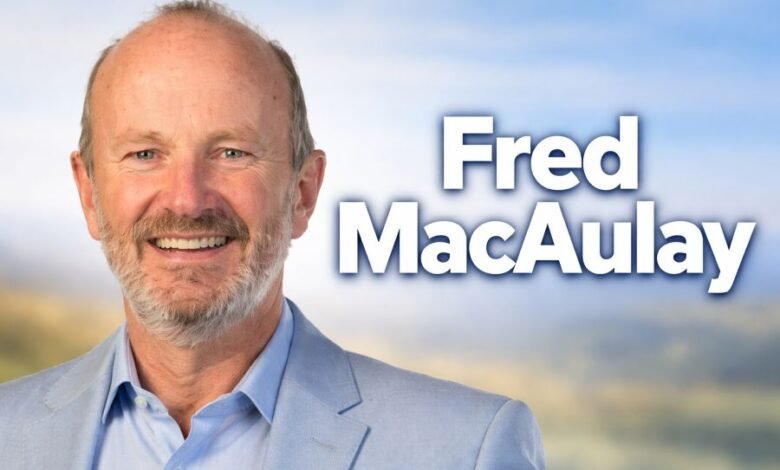
Table of Contents
ToggleIntroduction
Fred MacAulay is a name synonymous with British comedy. As a prominent Scottish comedian, he has captivated audiences with his sharp wit, observational humor, and distinctive Scottish accent. For over three decades, MacAulay has carved out a space for himself as one of Scotland’s finest entertainers, offering a unique blend of stand-up comedy, radio presenting, and television appearances. This article takes a deep dive into his career, his impact on Scottish comedy, and his lasting legacy in the entertainment industry.
Quick Bio
| Aspect | Detail |
|---|---|
| Full Name | Frederick MacAulay |
| Date of Birth | 29 December 1956 |
| Place of Birth | Perth, Scotland, UK |
| Profession | Comedian, Radio & TV Presenter |
| Education | MA in Accountancy & Jurisprudence |
| Spouse | Aileen (married 1984) |
| Children | 3 |
Early Life and Education
Fred MacAulay was born in Perth, Scotland, on 29 December 1956, to a family where humor and hard work were valued. He grew up with a deep appreciation for the arts but initially pursued a more traditional route in accountancy. After completing his MA in Accountancy & Jurisprudence at the University of Dundee, MacAulay began working in the accounting field. However, his passion for comedy soon overtook his career in finance, prompting him to pursue stand-up comedy.
Although his education and early life pointed towards a stable career in accounting, MacAulay’s true calling lay in entertaining people with his humor. He began performing at local comedy clubs in the late 1980s, where he quickly earned a reputation for his keen observations on life, especially from a Scottish perspective.
The Rise of a Comedian
MacAulay made the pivotal decision to leave behind his stable accounting job in 1993 and become a full-time comedian. This bold move paid off as he quickly gained recognition for his talent and wit. His stand-up comedy became increasingly popular, especially in Scottish comedy circuits and at major events like the Edinburgh Fringe Festival. Known for his sharp observational humor, MacAulay’s routine was often filled with anecdotes about life in Scotland, the quirks of British society, and his personal experiences.
While stand-up comedy was his main calling, MacAulay’s talents didn’t stop there. His television appearances and radio work would solidify his status as a household name in Scotland and beyond.
Radio Career: The Voice of Scotland
Fred MacAulay’s radio career began with his work on BBC Radio Scotland, where he became the face and voice of MacAulay and Co., a daily radio show that ran from 1997 to 2015. His ability to connect with the audience through his humor and warmth made him a fan favorite. MacAulay and Co. quickly became a cornerstone of afternoon radio for many listeners in Scotland, offering a mix of comedy, current affairs, and lively interviews with celebrities and everyday people alike.
His genuine charm and quick wit were perfect for radio, and MacAulay’s show became an essential part of the radio landscape. For nearly two decades, he kept listeners engaged, earning both accolades and an ever-growing fan base. The success of MacAulay and Co. solidified his reputation as a leading figure in Scottish comedy.
Television Appearances: A Familiar Face on British TV
MacAulay’s transition to television was just as successful. His appearances on panel shows like Have I Got News For You, Mock the Week, and QI introduced him to a wider audience across the UK. His charming yet straightforward persona made him an ideal panelist for these shows, where quick wit and humor are essential.
Moreover, MacAulay took on hosting roles in his own right. Shows like McCoist and MacAulay (co-hosted with footballer Ally McCoist) and Simply Fred showcased his versatility as both a comedian and a television presenter. His presence on television was always marked by his engaging delivery, endearing personality, and, of course, his Scottish accent, which added an extra layer of charm to his performances.
MacAulay’s Unique Comedy Style
MacAulay’s comedy style can best be described as observational with a distinct Scottish twist. He often focuses on everyday scenarios and turns them into comedic gold. Whether discussing the complexities of modern life, the peculiarities of British culture, or personal anecdotes, Fred MacAulay’s humor is relatable, intelligent, and most importantly, hilarious. His ability to make audiences laugh while maintaining a thoughtful and reflective perspective on life has made him a standout in the world of comedy.
As a Scottish comedian, MacAulay brings a unique cultural perspective to his performances. His humor resonates with both Scottish and international audiences, thanks to his ability to balance the nuances of Scottish life with universal themes of family, politics, and society.
The Legacy of Fred MacAulay
Fred MacAulay’s legacy in Scottish comedy is undeniable. He has been a pioneering figure in bringing Scottish humor to a broader audience, particularly through his radio career and television appearances. His long-running radio show, MacAulay and Co., and his numerous appearances on TV panel shows have made him one of the most recognized and respected comedians in the UK.
Moreover, his influence on younger generations of comedians cannot be overstated. MacAulay has mentored and collaborated with many up-and-coming talents, helping to shape the future of Scottish and British comedy.
FAQ
1. When did Fred MacAulay start his comedy career?
Fred MacAulay began his comedy career in 1988 and became a full-time comedian in 1993.
2. What is Fred MacAulay best known for?
Fred MacAulay is best known for his long-running BBC Radio Scotland show MacAulay and Co. and his numerous appearances on television panel shows like QI and Mock the Week.
3. Is Fred MacAulay still active in comedy?
Yes, Fred MacAulay is still active in comedy and performs at events like the Edinburgh Fringe Festival and other comedy circuits across the UK.
4. Has Fred MacAulay written any books?
While MacAulay is primarily known for his comedy, there is no widely available information indicating he has written books.
Conclusion
Fred MacAulay’s career as a Scottish comedian has spanned over three decades, making him a central figure in the UK comedy scene. His work in radio, television, and live comedy has earned him a loyal following, and his wit, charm, and keen observational skills continue to make him one of Scotland’s most beloved entertainers. As MacAulay continues to entertain and inspire audiences, his legacy as a comedy legend remains secure.