Victoria Herridge: The Brilliant Paleontologist Transforming Ice Age Science—A Powerful Journey of Discovery and Challenges
Uncovering Ancient Worlds While Bridging Science and Society

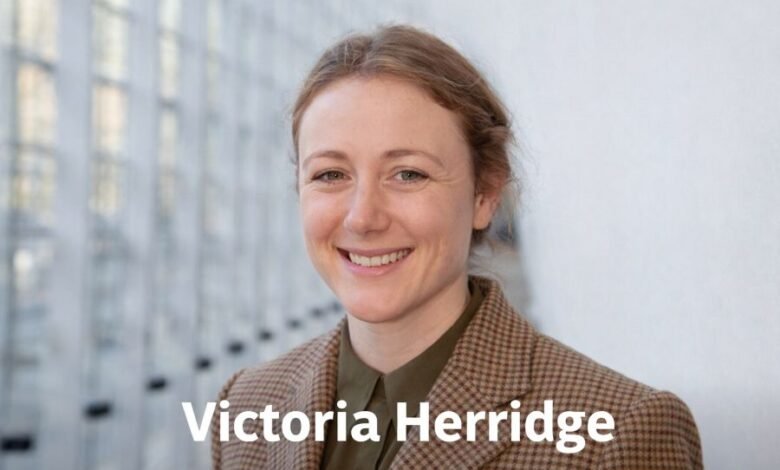
Table of Contents
ToggleIntroduction
Victoria Herridge is a name that stands out in modern science, particularly in the field of palaeontology. Known for her expertise in Ice Age mammals, she has built a reputation as both a skilled researcher and an engaging science communicator. Her work reflects not only scientific excellence but also a deep passion for making complex ideas accessible to the public.
At the same time, her journey highlights both the rewards and challenges of a career in science. While she has achieved recognition and influence, the path required dedication, years of study, and overcoming the barriers often faced in academic and media environments. This balance of success and struggle makes her story both inspiring and realistic.
Quick Bio
| Field | Details |
|---|---|
| Full Name | Victoria Louise Herridge |
| Known As | Victoria Herridge |
| Birth Year | 1980 |
| Nationality | British |
| Profession | Paleontologist, Evolutionary Biologist, TV Presenter |
| Specialization | Ice Age mammals, mammoths |
| Current Role | Senior Lecturer |
| Known For | Science communication and television presenting |
Early Life and Background
Victoria Herridge grew up in the United Kingdom, where her early environment played a key role in shaping her curiosity about the natural world. From a young age, she showed a strong interest in animals, history, and the mysteries of prehistoric life. These early influences gradually developed into a focused passion for science.
Her upbringing encouraged exploration and questioning, qualities that later became essential in her academic and professional life. Rather than following a conventional path, she pursued her fascination with fossils and evolution, setting the foundation for her future as a paleontologist.
Education and Academic Journey
Victoria Herridge pursued higher education at some of the most respected institutions in the United Kingdom. She earned a first-class degree in Biology, which demonstrated her academic strength and commitment to scientific study. This achievement opened the door to further specialization.
She continued her studies with postgraduate education, eventually completing a PhD focused on evolutionary biology. Her research explored dwarf elephants on Mediterranean islands, a topic that provided valuable insights into how species adapt to isolated environments. This work established her as a serious contributor to paleontological research.
Career Beginnings
After completing her doctoral studies, Victoria Herridge began her professional journey in academic and research environments. One of her early roles involved working in a major museum setting, where she gained hands-on experience with fossil collections and scientific analysis.
These early experiences were crucial in shaping her research direction. She focused on Ice Age mammals, particularly mammoths and ancient elephants, which became central themes in her career. Her ability to combine fieldwork with theoretical research helped her stand out in the scientific community.
Rise as a Leading Paleontologist
Victoria Herridge gradually built a strong reputation as a paleontologist specializing in Ice Age species. Her research explores how animals evolved in response to climate changes, providing important insights into both the past and present.
Her work on mammoths and related species has contributed to a better understanding of extinction, adaptation, and environmental change. As a Paleontologist, she combines scientific rigor with curiosity, making her research both credible and engaging.
Academic Career and Teaching
In addition to her research, Victoria Herridge has taken on an important role as an educator. She serves as a senior lecturer, where she teaches and mentors students in science and communication. Her teaching approach emphasizes clarity, curiosity, and critical thinking.
She is also involved in leading programs that focus on science communication. This reflects her belief that science should not remain confined to academic circles but should be shared with the wider public. Her dual role as a researcher and teacher strengthens her overall impact.
Media Career and Public Engagement
One of the most distinctive aspects of Victoria Herridge’s career is her work in media. She has appeared on several television programs, bringing scientific topics to a broader audience. Her ability to explain complex ideas in simple terms has made her a popular science presenter.
Through television and public speaking, she has helped bridge the gap between scientists and everyday viewers. This role is not without challenges, as simplifying science without losing accuracy requires skill and balance. However, she has successfully managed to maintain both credibility and accessibility.
Contributions to Science Communication
Victoria Herridge is not only a researcher but also an advocate for better communication in science. She believes that making knowledge accessible is essential for societal progress. This perspective has guided much of her public work.
She has also been involved in initiatives that highlight the contributions of women in science. By promoting diversity and inclusion, she is helping to create a more balanced and representative scientific community. This contribution adds another important dimension to her legacy.
Achievements and Recognition
Throughout her career, Victoria Herridge has earned recognition for both her research and communication efforts. She is respected within academic circles and appreciated by the public for her engaging presentations.
Her achievements reflect a combination of dedication, expertise, and adaptability. While awards and recognition are important, her real success lies in her ability to influence both scientific understanding and public awareness.
Challenges and Realities
Despite her success, the journey has not been without difficulties. A career in science often involves long periods of research, uncertainty, and competition. Balancing academic responsibilities with media commitments can also be demanding.
However, these challenges have shaped her resilience and determination. Instead of limiting her progress, they have contributed to her growth as both a scientist and communicator. This realistic aspect of her journey makes her story relatable and inspiring.
Conclusion
Victoria Herridge represents a powerful example of how passion, education, and determination can lead to a meaningful and impactful career. As a Paleontologist, she has contributed valuable knowledge about Ice Age animals and evolutionary processes.
At the same time, her work in media and education has helped bring science closer to the public. Her journey highlights both the positive achievements and the challenges of a scientific career, making her a significant figure in modern science.
FAQ
Who is Victoria Herridge?
Victoria Herridge is a British paleontologist and science communicator known for her work on Ice Age mammals and television appearances.
What is Victoria Herridge famous for?
She is famous for her research on mammoths and ancient elephants, as well as her role in presenting science programs.
What does Victoria Herridge study?
She studies evolutionary biology, focusing on Ice Age species and how animals adapt to environmental changes.
Is Victoria Herridge a teacher?
Yes, she works as a senior lecturer and teaches science communication.
Why is Victoria Herridge important?
She plays an important role in both advancing scientific research and making science understandable to the general public.