Malcolm Healey Biography: The Entrepreneur Behind Wren Kitchens
Last Updated: June 19, 2026

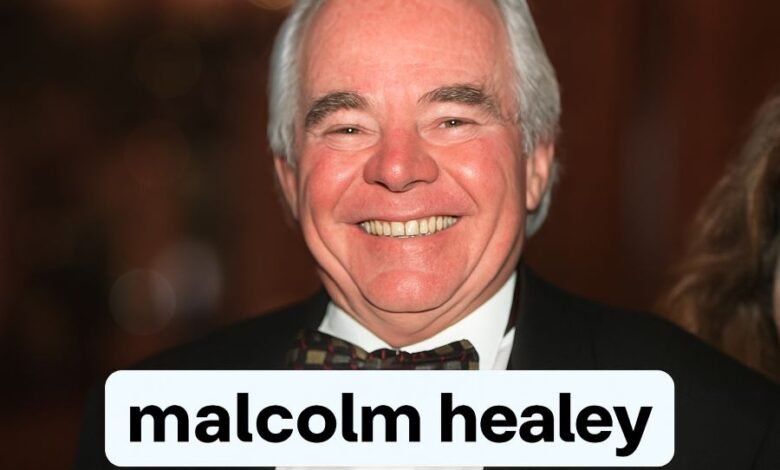
Table of Contents
ToggleIntroduction
Malcolm Healey is a British entrepreneur, industrialist, and retail businessman best known as the founder and owner of Wren Kitchens. His business journey began in Hull, where his family sold painting and decorating supplies. He later became an important figure in the fitted-kitchen industry through Humber Kitchens, Hygena, Mill’s Pride, and Wren Kitchens.
Unlike many modern founders, Healey built his reputation through physical manufacturing, large retail operations, supply chains, and home-improvement products. His biography shows how experience gained in a small family business can develop into a long international career.
Malcolm Healey is famous for building and selling major kitchen companies before launching Wren Kitchens later in his career.
Malcolm Healey Quick Bio
| Biography Detail | Information |
|---|---|
| Full Name | Malcolm Stanley Healey |
| Known As | Malcolm Healey |
| Date of Birth | June 1944 |
| Birthplace | Kingston upon Hull, East Yorkshire, England |
| Nationality | British |
| Profession | Entrepreneur, industrialist and businessman |
| Industry | Kitchen manufacturing, furniture and retail |
| Famous For | Founding and owning Wren Kitchens |
| Earlier Businesses | Humber Kitchens, Hygena and Mill’s Pride |
| Brother | Eddie Healey |
| Current Major Role | Director of Wren Kitchens Limited |
| Active Business Interests | The Wren Group, West Retail Group and Warter Priory Management |
Who Is Malcolm Healey?
Malcolm Stanley Healey is a Hull-born business owner whose career has largely focused on kitchens, furniture, manufacturing, and retail. He is often described as a serial entrepreneur because he built successful operations in both the United Kingdom and the United States.
His working life covers several stages of the modern home-improvement market. He gained early retail experience through his family’s decorating business, entered kitchen manufacturing through Humber Kitchens, developed Hygena with MFI, created Mill’s Pride in America, and later returned to the British market with Wren Kitchens.
This ability to begin again after selling an established company separates his story from that of a founder who spends an entire career with one business. Like global industrial figures such as Sri Prakash Lohia, Healey repeatedly used knowledge from one market to build operations on a much larger scale.
Early Life and Family Background
Malcolm Healey was born in June 1944 in Kingston upon Hull, East Yorkshire. He grew up in a family connected to the painting, decorating, and home-improvement trade.
His father, Stanley Healey, reportedly operated a small shop selling painting and decorating supplies in Hull. This business gave the family practical knowledge of customers, stock, pricing, and retail operations.
Malcolm’s older brother, Eddie Healey, also became a successful entrepreneur. While Malcolm became closely associated with kitchen manufacturing, Eddie later became known for property development and his role in creating Sheffield’s Meadowhall Shopping Centre.
The brothers’ careers followed different routes, but their early business foundations were similar. Both gained experience through the family trade before entering larger commercial ventures.
Detailed public information about Malcolm Healey’s formal education is limited. His career is instead strongly connected with practical business experience, product knowledge, manufacturing systems, and retail expansion.
Starting Work in the Family Business
Healey’s first professional experience came through the family’s paint and decorating operation. The business later developed into the Status Discount retail chain, which sold DIY and home-improvement products across northern England.
Status Discount grew into a sizeable retail operation before being sold to MFI in 1980. Working in this environment helped Healey understand the needs of ordinary homeowners and the growing demand for affordable improvement products.
This period also introduced him to store expansion, consumer buying behaviour, product distribution, and the challenges of managing a multi-location retail business. These skills became important when he moved into fitted kitchens.
The early experience is a central part of the Malcolm Healey biography because it explains why his later companies combined production with direct retailing. He understood both how products were made and how customers wanted to buy them.
Humber Kitchens and the Move into Manufacturing
In 1976, Malcolm Healey established Humber Kitchens. The company marked his move from general DIY retail into the specialist fitted-kitchen sector.
The British kitchen market was changing at the time. More households wanted coordinated cabinets, worktops, storage units, and appliances rather than separate items purchased from different suppliers. Humber Kitchens entered this growing market with a focus on organised production and accessible designs.
Healey’s experience in home-improvement retail gave him a useful view of customer expectations. He could see that buyers wanted kitchens that appeared modern but were also practical, available at scale, and supported by an organised sales process.
The development of Humber Kitchens placed him among notable British manufacturers. Readers interested in another British industrial career can also explore the story of Harry Djanogly, whose work developed within the textile and manufacturing sector.
The Hygena Business Deal
A major turning point came in 1982 when Humber Kitchens and MFI jointly acquired the Hygena kitchen brand. Hygena was already widely recognised in the British fitted-furniture market.
The partnership gave Healey access to a larger retail network and a familiar consumer name. It also allowed MFI to strengthen its position in the kitchen market while benefiting from Humber Kitchens’ manufacturing experience.
MFI later took full control of Hygena in 1987. Contemporary business reporting places the value of Healey’s exit at approximately £200 million.
The transaction established him as a major figure in British retail and manufacturing. More importantly, it gave him the resources and confidence to test his business model outside the UK.
Building Mill’s Pride in the United States
After leaving Hygena, Healey moved into the American market and established Mill’s Pride in Ohio. The company produced ready-to-assemble kitchen cabinets for large-scale retailers and homeowners.
Entering the United States was a significant step. The country offered a much larger consumer market, but it also required different factories, distribution systems, retailer relationships, and product standards.
Healey applied many of the lessons he had learned in Britain. Mill’s Pride focused on efficient cabinet production, repeatable designs, flat-pack products, and large retail distribution.
The business became an important name in American kitchen-cabinet manufacturing. It was later sold to Masco Corporation in the late 1990s in a deal widely reported at around £800 million.
His American career demonstrated that his earlier success was not dependent on a single company or national market. It also strengthened his knowledge of high-volume production, logistics, and vertically organised retail operations.
Founding Wren Kitchens
Malcolm Healey later returned to the British kitchen industry and launched Wren Kitchens. The company was incorporated in 2009 and developed into a designer, manufacturer, and retailer of fitted kitchens.
Wren’s business model brings several stages of the customer journey together. The company designs kitchen ranges, manufactures cabinets, operates showrooms, arranges planning appointments, and manages delivery through its own wider system.
This vertically integrated approach gives the business greater control over product design, production, pricing, and customer service. Instead of depending entirely on outside cabinet manufacturers, Wren can connect its factories directly with its retail network.
The official Wren Kitchens website currently describes the company as the UK’s number-one kitchen retailer and lists more than 100 showrooms. Its large manufacturing presence has also made it an important employer in the Humber region.
Healey launched Wren when he was already an experienced businessman. This makes the company an unusual example of major entrepreneurial growth later in a founder’s career.
Watch Inside a Wren Kitchens Factory
The following official video shows Wren Kitchens’ Parrott Street manufacturing facility and the technology used in its large-scale production process.
Video placement: Keep this embedded video directly after the “Founding Wren Kitchens” section and before the career timeline.
Malcolm Healey Career Timeline
| Year | Career Development |
|---|---|
| 1944 | Born in Kingston upon Hull, East Yorkshire |
| Early career | Worked in the family painting, decorating, and DIY business |
| 1976 | Established Humber Kitchens |
| 1980 | Status Discount was sold to MFI |
| 1982 | Humber Kitchens and MFI acquired Hygena |
| 1987 | MFI took full control of Hygena |
| Late 1980s–1990s | Developed Mill’s Pride in the United States |
| Late 1990s | Mill’s Pride was sold to Masco Corporation |
| 1998 | Became a director of Warter Priory Management |
| 2009 | Wren Kitchens was incorporated |
| 2015 | Became a director of Wren Kitchens Limited |
| 2024 | Appointed as a director of The Wren Group Limited |
| 2026 | Remains connected with active Wren and West Retail companies |
Leadership and Business Style
Healey’s career suggests a leadership style centred on operational control. His companies have not simply sold kitchen products; they have managed manufacturing, product development, distribution, and retail presentation.
His long-term pattern has been to identify a large consumer market, create an efficient production system, and connect that system with a strong sales network. This approach appeared at Humber Kitchens, Mill’s Pride, and Wren Kitchens.
He also appears comfortable entering markets that require heavy investment. Kitchen manufacturing needs factories, machinery, transport, skilled workers, showrooms, and dependable supply chains. It is very different from a business that can be started with a small digital team.
Leadership can take different forms. Government figures such as Antonia Romeo lead through public administration, while creative executives such as Graham King manage projects and talent. Healey’s record is mainly based on production systems, retail growth, and commercial execution.
Current Companies and Business Roles
As of June 2026, public filings at Companies House list Malcolm Stanley Healey as an active director of several companies.
These include Wren Kitchens Limited, The Wren Group Limited, The West Retail Group Limited, Wren US Holdings Limited, West A Services Limited, and Warter Priory Management Limited.
His appointment to the board of Wren Kitchens Limited began in November 2015. He also became a director of The Wren Group Limited in January 2024.
These records show that he remains formally connected with the wider business structure rather than being known only as a historical founder.
Warter Priory and Property Interests
Healey’s commercial activities have also included property and estate management. He is connected with Warter Priory Management Limited, where he has served as a director since 1998.
Warter Priory is an estate in East Yorkshire. Although media reports have discussed its land and estimated value, exact modern figures can vary greatly and are not necessary for understanding his business career.
The long directorship demonstrates that his interests extend beyond kitchen manufacturing. However, kitchens and home retail remain the industries most closely associated with his public identity.
Personal Life and Public Image
Malcolm Healey has generally maintained a lower public profile than many founders of similarly large companies. There are few detailed interviews about his daily life, personal opinions, education, or private relationships.
Public coverage mainly focuses on his companies, property interests, business transactions, and the commercial achievements of the wider Healey family.
This limited public presence makes it important not to fill gaps with assumptions. His confirmed biography is strongest when it concentrates on his Hull background, family business experience, kitchen companies, manufacturing career, and active directorships.
Major Business Achievements
Healey’s most significant achievement is building major kitchen operations in more than one country. He succeeded first in Britain through Humber Kitchens and Hygena, then in America through Mill’s Pride, and later again in Britain through Wren Kitchens.
Another important achievement is the scale of Wren’s manufacturing and showroom network. The company’s development shows how a traditional product category can grow through automation, direct retailing, design services, and control over production.
His career also demonstrates the value of industry knowledge. Rather than moving repeatedly between unrelated sectors, he continued building deeper experience in kitchens, cabinets, home improvement, and furniture retail.
Readers studying business growth strategies can see several practical themes in his career: understand the customer, control important operations, enter larger markets carefully, and use earlier experience when starting a new company.
Why Malcolm Healey’s Career Is Important
The Malcolm Healey life story is important because it connects traditional family retail with modern automated manufacturing. His career began before online shopping, digital kitchen planners, and highly automated factories became common.
Over several decades, he adapted to major changes in customer behaviour, production technology, retail design, and international competition.
His business biography also challenges the idea that entrepreneurship belongs mainly to young startup founders. Wren Kitchens became his best-known modern company even though he had already completed several major ventures.
This makes his journey useful for people studying serial entrepreneurship, British manufacturing, retail leadership, family-business history, and long-term company growth.
Interesting Facts About Malcolm Healey
- His full name is Malcolm Stanley Healey.
- He was born in Hull in June 1944.
- His business background began in painting, decorating supplies, and DIY retail.
- He established Humber Kitchens in 1976.
- He developed major kitchen businesses in both Britain and the United States.
- Mill’s Pride operated from Ohio and supplied ready-to-assemble cabinets.
- Wren Kitchens was established after he had already completed a long international career.
- His brother Eddie Healey became known for property development.
- He has held a directorship at Warter Priory Management since 1998.
- Current filings continue to list him in active business roles.
Frequently Asked Questions
Who is Malcolm Healey?
He is a British entrepreneur and industrialist best known for founding and owning Wren Kitchens.
What is Malcolm Healey’s full name?
His full name is Malcolm Stanley Healey.
When was Malcolm Healey born?
He was born in June 1944.
Where was Malcolm Healey born?
He was born in Kingston upon Hull, East Yorkshire, England.
Why is Malcolm Healey famous?
He is famous for building Humber Kitchens, developing Mill’s Pride in America, and founding Wren Kitchens.
Did Malcolm Healey create Hygena?
He did not originally create the brand, but Humber Kitchens and MFI acquired Hygena together in 1982.
Who was Malcolm Healey’s brother?
His brother was Eddie Healey, a British property developer associated with Meadowhall Shopping Centre.
Is Malcolm Healey still connected with Wren Kitchens?
Yes. Companies House lists him as an active director of Wren Kitchens Limited as of June 2026.
Conclusion
Malcolm Healey’s biography tells the story of a British businessman who turned experience in a small Hull family trade into an international career in kitchen manufacturing and retail.
From Humber Kitchens and Hygena to Mill’s Pride and Wren Kitchens, he repeatedly built businesses around practical products, efficient manufacturing, and large consumer markets. His ability to apply knowledge across different companies and countries is one of the clearest features of his professional journey.
Today, he remains formally connected with Wren Kitchens and several related companies. His career continues to stand as a notable example of British entrepreneurship, industrial growth, retail expansion, and long-term business leadership.