Conor Gearty Powerful Legacy: Brilliant Scholar, Tragic Sudden Loss
A human rights voice remembered for courage and conscience

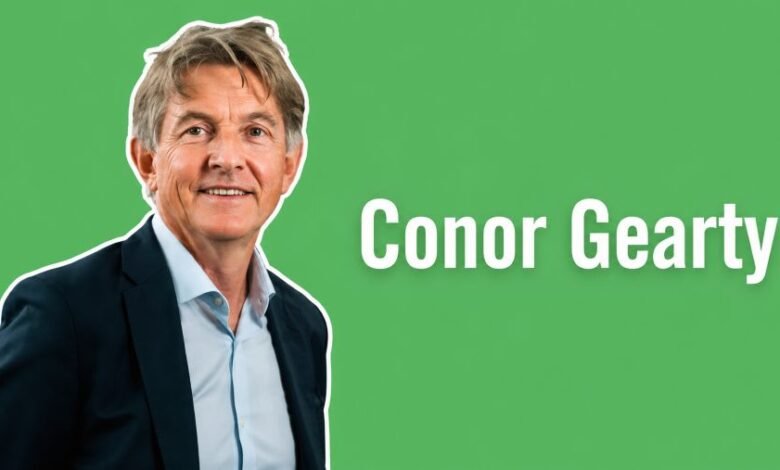
Table of Contents
ToggleIntroduction
Conor Gearty was an Irish legal scholar and professor whose work made a strong mark on human rights law, civil liberties, public law, and terrorism studies. He was widely respected as a teacher, barrister, author, and public intellectual. His career connected academic research with real legal debates about freedom, democracy, security, and the power of the state.
He is best remembered as Professor of Human Rights Law at the London School of Economics and Political Science, a founding figure in LSE’s human rights work, and a founding member of Matrix Chambers. His sudden death in September 2025 was a major loss for students, lawyers, scholars, and human-rights advocates who valued his sharp thinking and moral courage.
Quick Bio
| Field | Details |
|---|---|
| Real Name | Conor Anthony Gearty |
| Date of Birth | 4 November 1957 |
| Birthplace | Dublin, Ireland |
| Raised In | Abbeylara, County Longford, Ireland |
| Nationality | Irish |
| Profession | Legal scholar, professor, barrister, author |
| Main Field | Human rights law, civil liberties, terrorism law |
| Main Institution | London School of Economics and Political Science |
| Legal Chambers | Matrix Chambers |
| Spouse | Diane Wales; later Aoife Nolan |
| Children | Eliza, Owen, Éile, and Fiadh |
| Parents | Enda Gearty and Margot Gearty |
| Death | 11 September 2025 |
| Age at Death | 67 |
Early Life and Family Background
Conor Gearty was born in Dublin, Ireland, on 4 November 1957. He was raised in Abbeylara, County Longford, where his early life was shaped by Irish history, legal culture, and family values. His father, Enda Gearty, was a solicitor, while his mother was Margot Gearty, née Kiernan.
He was the second of six children. His family background also carried historical Irish connections, including links to Joe McGuinness and Kitty Kiernan. This background helped shape his interest in justice, public life, and the relationship between law and political power.
Education
Conor Gearty attended Castleknock College in Dublin before studying law at University College Dublin. At university, he became known as a talented speaker and debater. His strong communication skills later became one of the defining qualities of his teaching, lectures, public talks, and legal commentary.
After graduating from University College Dublin, he moved to Cambridge. He studied at Wolfson College and later became connected with Emmanuel College, Cambridge. He completed advanced legal studies and earned a PhD in law, with early academic work connected to environmental law.
Career Beginning
Gearty first qualified as a solicitor in Ireland, but his main career direction became academic law and legal scholarship. His early academic path began at Cambridge, where he became a Fellow in Law at Emmanuel College. This period helped establish him as a serious and original legal thinker.
He later moved to King’s College London, where he worked as a senior lecturer, reader, and professor. His time at King’s College helped build his reputation as a powerful legal scholar and professor in the fields of civil liberties, human rights, and public law.
Academic Career
In 2002, Conor Gearty joined the London School of Economics and Political Science as the founding Director of the Centre for the Study of Human Rights. He led the Centre from 2002 to 2009 and helped make LSE an important place for the study of human rights and social justice.
At LSE, he later served as Director of the Institute of Public Affairs from 2012 to 2016. His academic career was not limited to classrooms and books. He also built conversations across law, politics, ethics, and society, making complex human-rights ideas easier for wider audiences to understand.
Legal Career
Alongside academia, Gearty was a practising barrister and a founding member of Matrix Chambers. His legal practice focused on judicial review, human rights law, civil liberties, and public law. This gave his academic work practical strength because he understood how legal principles worked in real cases.
He was also an Honorary King’s Counsel and a Bencher of Middle Temple and King’s Inn in Dublin. These honours reflected his respected position in both the academic and legal worlds.
Books and Major Work
Conor Gearty wrote widely on law, rights, terrorism, and democracy. His important books include Freedom Under Thatcher, Terror, Civil Liberties, Principles of Human Rights Adjudication, Can Human Rights Survive?, Liberty and Security, On Fantasy Island, and Homeland Insecurity.
His later work focused strongly on anti-terrorism law and the danger of governments using security arguments to limit civil liberties. His 2024 book Homeland Insecurity examined the rise of global anti-terrorism law and its effect on democratic freedom.
Career Timeline
| Year | Career Event |
|---|---|
| 1957 | Born in Dublin, Ireland |
| 1978 | Graduated in law from University College Dublin |
| 1980s | Continued legal study at Cambridge |
| 1986 | Completed PhD in law at Cambridge |
| 1983–1990 | Fellow in Law at Emmanuel College, Cambridge |
| 1990s | Joined King’s College London |
| 2000 | Became a founding member of Matrix Chambers |
| 2002 | Joined LSE as founding Director of the Centre for the Study of Human Rights |
| 2002–2009 | Directed LSE’s Centre for Human Rights |
| 2010 | Elected Fellow of the British Academy |
| 2012–2016 | Directed LSE’s Institute of Public Affairs |
| 2024 | Published Homeland Insecurity |
| 2025 | Died suddenly on 11 September |
Personal Life
Conor Gearty married Diane Wales in 1986. She later worked as a BBC producer and died in 2011. In 2015, he married Aoife Nolan, a human rights lawyer and professor. He had four children: Eliza, Owen, Éile, and Fiadh.
His personal life was connected to family, teaching, writing, and public service. Many tributes after his death described not only his intelligence but also his warmth, humour, generosity, and ability to inspire younger scholars and activists.
Complete Career Overview
Conor Gearty’s career was powerful because it combined many roles. He was a legal scholar and professor, but also a barrister, public speaker, writer, and mentor. He did not treat human rights as a dry academic subject. Instead, he connected rights to real people, real politics, and real dangers.
His work asked difficult questions: how can states protect people without destroying freedom? How should democracies respond to terrorism? When does security law become a threat to civil liberties? These questions made his work important for lawyers, judges, students, policymakers, and human-rights defenders.
Recent News
The main recent news about Conor Gearty was his sudden death on 11 September 2025. LSE, Matrix Chambers, the British Academy, and legal communities in Britain and Ireland published tributes recognizing his major contribution to law, education, and human rights.
His passing was described as a great loss because he remained active as a scholar and public thinker. His final major work, Homeland Insecurity, continued his lifelong concern with the balance between public safety and democratic freedom.
Legacy
Conor Gearty’s legacy lives in his books, lectures, legal arguments, students, and public influence. He helped shape modern understanding of human rights, civil liberties, terrorism law, and public law. His voice was powerful because it was both scholarly and human.
He will be remembered as a legal scholar and professor who challenged easy answers, questioned excessive state power, and defended the importance of freedom. His work remains valuable for anyone studying law, democracy, human rights, or the future of civil liberty.
Conclusion
Conor Gearty’s life tells the story of a brilliant Irish legal mind who used scholarship, teaching, and advocacy to defend human dignity. His career was positive in its influence, but his sudden loss was deeply tragic for the legal and academic world.
As a legal scholar and professor, he showed that law is not only about courts and rules. It is also about people, justice, courage, and conscience. That is why his legacy continues to matter.
FAQs
Who was Conor Gearty?
Conor Gearty was an Irish legal scholar, professor, barrister, and author known for his work on human rights law, civil liberties, terrorism law, and public law.
What was Conor Gearty’s real name?
His real name was Conor Anthony Gearty.
Where was Conor Gearty born?
He was born in Dublin, Ireland, and raised in Abbeylara, County Longford.
What was Conor Gearty’s nationality?
He was Irish.
Who were Conor Gearty’s parents?
His parents were Enda Gearty and Margot Gearty.
Was Conor Gearty married?
Yes. He was married to Diane Wales and later to Aoife Nolan.
Did Conor Gearty have children?
Yes. He had four children: Eliza, Owen, Éile, and Fiadh.
What was Conor Gearty famous for in his career?
He was famous for his scholarship on human rights, civil liberties, terrorism law, and the dangers of excessive state power.